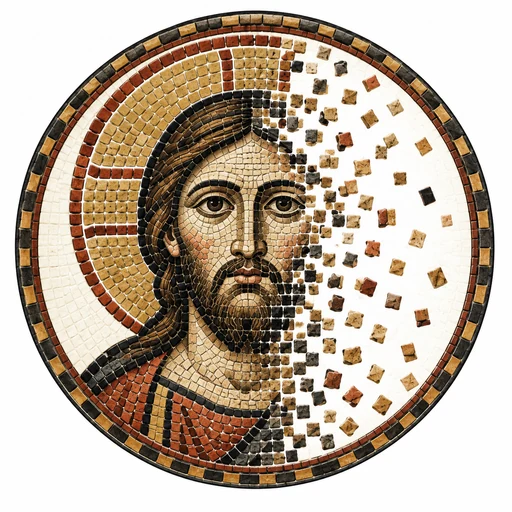
Christ Before Jesus argues that the Jesus portrayed in the New Testament was a second-century literary creation. Its case combines Gospel source relationships, the Marcionite collection, disputed Roman and Jewish notices, early church testimony, and stylometric comparisons.
The central thesis
Britt and Wingo argue that the Jesus of the Gospels and New Testament never existed as a first-century human. In their model, earlier Jewish and Greco-Roman traditions supplied language and narrative material; second-century Christian communities developed those materials into a Gospel figure and a religion centered on a historical, divine Jesus.
The book treats the canonical Gospels as literary constructions with later attributions, revisions, and relationships to other texts. Its point is not that Christianity was unreal: the communities, disputes, and institutions were historical. The claim is that those facts do not establish the Gospel founder.
The Proto-Mark correction
The book's original model proposed a distinct Proto-Mark layer around 120 CE and related it to Josephus. In a later public update, Britt said retesting found no stylometric evidence for that reconstructed layer; the authors became more agnostic about Markan priority and no longer considered the separate Proto-Mark secure. The site does not use c. 120 as an established date.
The book's separate reconstruction places Marcion's Evangelion before canonical Luke. Its key example is Luke 4:23: Jesus refers to signs already done in Capernaum before Luke narrates his arrival there in 4:31. The book reads that sequence as a trace of Luke adapting an earlier source that began in Capernaum. It places Matthew and John later and identifies Luke's addressee Theophilus with Theophilus of Antioch (dated by the authors to 169–182 CE), using that identification in dating Luke–Acts.
Scripture, earlier traditions, and the revolt
The book reads Gospel scenes as reworkings of Jewish scripture, Josephus, and Greek literary traditions. It places messianic language and ritual ideas before the Gospel biography and proposes the Bar Kokhba revolt of 132–136 CE as a context for later apocalyptic material, including Mark 13. It also compares Gospel wine and healing motifs with traditions associated with Dionysus and Asclepius, including the Bethesda pool's association with healing. These are the authors' proposed literary and historical connections.
The site covers this part of the argument through its pages on pre-Christian traditions, scriptural composition, Gospel formation, and historical setting.
Competing Gospel traditions
The book discusses roughly forty noncanonical or alternative Gospel texts and uses their different portraits of Jesus, Mary, Judas, and the disciples to illustrate the range of second-century Christian literature. The texts do not share one genre or one date; the book examines them alongside later disputes over which writings counted as scripture.
The site's Gospel diversity article presents representative examples and traces how later church writers classified accepted, disputed, and rejected books.
Nazareth: occupation is not a place-name attestation
Christ Before Jesus argues that Nazareth is absent from non-Christian first-century writing and proposes that the settlement associated with the Gospel name arose after the Bar Kokhba revolt. It links the place-name to a sectarian label as part of its second-century setting.
Excavations at the site of modern Nazareth establish settlement activity before 144 CE. Yardenna Alexandre’s Israel Antiquities Authority report dates one occupation layer from the late second century BCE to the first third of the second century CE. That is evidence of occupation at the location; the excavated material does not name the settlement. The earliest independent inscription naming Nazareth located for this page is the Caesarea priestly-course fragment, which the Inscriptions of Israel/Palestine corpus dates 200–500 CE. The so-called Nazareth Inscription is a Roman edict about tomb disturbance; it does not name the town, and its original provenance is unknown. Isotope analysis identifies Kos as the likely marble source. The archaeology therefore does not establish that the pre-144 settlement was called Nazareth or connect it to Jesus. The Gospel texts provide the name, but their pre-144 composition dates are reconstructions, not an independent pre-144 attestation.
John the Baptist and the story's development
The book accepts Josephus' John the Baptist as a historical preacher but argues that Luke's cousin relationship is unsupported by another source. It reads John's Gospel role as a bridge between an existing Baptist movement and the later Jesus narrative, rather than independent confirmation of a family relationship.
The book also treated Mark's ending at the empty tomb as an early form and proposed that later Gospel versions added post-death appearances and a more physical Jesus. That reading depended on its distinct Proto-Mark reconstruction. Matthew Britt later reported that retesting found no stylometric evidence for Proto-Mark and that the authors no longer felt comfortable with the layer. The manuscript evidence for Mark 16:9–20 is a separate textual question; it does not establish the book's proposed short-Mark chronology.
The book’s conclusion on Paul
Christ Before Jesus concludes that the letters attributed to Paul are second-century compositions and that Paul is a literary figure rather than a documented first-century author. This site follows that conclusion and dates the collection’s documentary appearance to the Marcion-era record around 144 CE.
Christ before a biographical Jesus
A recurring argument in the book is that early references to Christians or Christus do not automatically name Jesus or describe a human biography. Pliny's letter refers to Christians and a hymn to Christ; Tacitus uses Christus. The authors argue that the title can precede a Gospel narrative and discuss Chrestus/Chrestian spellings as a possible source of confusion.
The distinction is central to the book's title: a messianic or Christ movement can exist before its texts present a named Jesus with a hometown, family, disciples, and earthly career. A title or group label alone does not supply those details.
Josephus and Tacitus in the book’s argument
The book argues that the entire Testimonium Flavianum in Antiquities 18 is a Christian insertion, first quoted by Eusebius. For Antiquities 20, it treats the phrase about James and Jesus ‘called Christ’ as a later addition and emphasizes that Josephus names Jesus son of Damneus immediately afterward.
For Tacitus, the book treats the Christus notice as an interpolation or textual alteration and questions whether Tacitus relied on an independent Roman source. It does not claim that the entire Nero-fire episode was interpolated.
Church memory, manuscripts, and canon
The book reads writers such as Clement, Papias, Justin, Irenaeus, and Eusebius through their dates, attribution histories, fragments, and interests in defining authority. It argues that claims of an apostolic chain were assembled retrospectively as Christian groups disputed texts and leadership. It also points to the many second-century leaders described as converts as part of its case that Christian institutions were still developing. Its chapters examine Marcion, Ignatius, Polycarp, Tatian, and other leaders as evidence for second-century communities and textual disputes.
It distinguishes a text's proposed composition date from the date of a manuscript copy. The book argues that the manuscript fragments and copies it discusses do not reach the first-century dates assigned to Christian texts, and places the earliest physical evidence in the late second century or later. The site's P52 and manuscript pages lay out the dating evidence as broad ranges rather than exact years.
Stylometry and what it can establish
The authors use Stylo to compare Greek texts by word-frequency patterns and report clusters linking most of Luke with a reconstruction of Evangelion, while Luke 1–4 and 24 group more closely with Acts. They argue that the Pauline collection contains multiple authorial layers; their results place Romans, First and Second Corinthians, and Galatians closest to one cluster, while still identifying sections they attribute to other writers. They also report multiple authors in the Ignatian letters and an unusual stylistic distance in Josephus' Antiquities 17–19.
The book's concluding reconstruction places Irenaeus, or possibly Polycarp, behind Luke–Acts, drawing on the clusters, the texts' proposed dates, and Luke's dedication. This is the authors' historical inference, not a name printed in a stylometric output. Stylometry measures similarity; it does not return a calendar date or prove a named author by itself. The book combines its results with source comparisons and external references to build its chronology.
How this site uses the book
The site's case adopts the book's mythicist conclusion, its distinction between Christ-language and a developed Jesus biography, its Marcion-era documentary anchor, and its argument that Gospel narratives grew through literary reuse and revision.
The site incorporates the authors' post-publication correction: it does not present the book's c. 120 Proto-Mark reconstruction as a supported or established text. It follows the book's second-century literary-Paul model rather than its explored BCE-core alternative, and treats the proposed authorship of Luke–Acts as a hypothesis. The guide links each strand to the relevant evidence pages.
The case
This site shares the book's conclusion that Jesus was not a historical founder and adopts its second-century literary-Paul model. It also incorporates the authors' post-publication correction to their Proto-Mark reconstruction.
Conclusion
The book's proposed Proto-Mark layer around 120 CE was later withdrawn as a distinct, stylometrically supported text. Reports about Marcion dated to 144 CE remain the earliest documentary anchor in this site's chronology for a Gospel and a collection of letters attributed to Paul.