Christian writings report persecution and martyrdom for apostles and Polycarp. Their dates, literary forms, sources, and claims about eyewitnesses differ; willingness to die does not by itself verify the Gospel biography or establish what a person knew.
What the phrase ‘die for a lie’ assumes
The argument bundles several claims together: that each named apostle existed, personally saw Jesus alive, knew the later Christian account was true, was executed for that testimony, and refused a real chance to recant. Each link needs evidence. A story that a person died does not establish the person’s identity, knowledge, motive, or the truth of the story that person supposedly defended.
The evidence does not show that a community of identifiable first-century eyewitnesses was offered freedom in exchange for denying what it had seen. The martyr argument treats that unrecorded scene as a fact, then uses the assumed fact to authenticate Jesus.
What Acts and the Gospels report
Among the Twelve, Acts names one death: James son of Zebedee is killed by Herod with the sword (Acts 12:1–2). This is an event inside Acts’ narrative, not a separate execution record. It does not say James was offered release for denying Jesus or describe a recantation test.
Matthew 27:3–10 says Judas hanged himself; Acts 1:18–19 gives a different death scene in which he falls and his body bursts open. Neither account describes a martyrdom. These accounts do not say how the rest of the Twelve died. Paul is a separate literary figure, not one of the Twelve.
1 Clement makes death claims, not a recantation case
The text called 1 Clement names no author and gives no year. Irenaeus later refers to a Roman church letter sent to Corinth in Clement’s period; Eusebius supplies a fuller attribution and chronology. The usual late-first-century composition date is inferred from internal clues, not stated in the letter or confirmed by a dated first-century copy. See the site’s separate audit of Clement’s authorship and date.
In 1 Clement 5–6, Peter is said to have endured hardship and suffered martyrdom. The literary figure Paul is said to have been imprisoned, driven into exile, stoned, and put to death under authorities. These are explicit claims in the letter. It gives no eyewitness source, execution record, date for either death, or account of either man being asked to retract testimony about Jesus.
Later Acts turn apostles into narrative heroes
The Acts of Peter and Acts of Paul are second-century literary narratives by anonymous writers. Their execution scenes belong to stories built from miracles, speeches, dramatic conversions, and confrontations with rulers. In the Acts of Peter, Peter’s death by inverted crucifixion concludes an account built around a public miracle contest with Simon Magus. In the Acts of Paul, the character Paul is beheaded after an extended career of wonders and confrontations with Nero.
The Acts of Andrew is conventionally placed in the second century; versions preserve an elaborate crucifixion story in which Andrew preaches from the cross. The Acts of Thomas is generally placed in the early third century and ends with Thomas killed by spears in India. Their dates are estimates of composition, not dates written inside the stories or records from the executions they narrate.
The catalogue grows and its endings vary
Later acts and martyr texts add Philip, Bartholomew, Matthew, and other named disciples. They give different routes, rulers, torture scenes, and deaths; the Acts of Philip itself is incomplete. Some versions of Matthew’s story end with his death, while other accounts do not. Pseudo-Hippolytus’ apostle list assigns James son of Alphaeus a stoning, but says Simon and Matthias died peacefully. This is a collection of separate traditions, not one contemporary report covering all twelve.
The name James also creates a recurring mix-up. Acts 12 identifies James son of Zebedee. Josephus’ Antiquities 20 concerns a different James and does not identify him as one of the Twelve or as Zebedee’s son. The site’s Josephus analysis examines the clause about Jesus and the adjacent appointment of Jesus son of Damneus.
John on Patmos is not a death report
Revelation 1:9 has a writer called John say that he was on Patmos because of his testimony. The line does not say he was executed, identify him as John son of Zebedee, or state that he was an eyewitness to Jesus’ life. Later identifications and death traditions must be attributed to the later writers who make them.
A fourth-century image records later memory
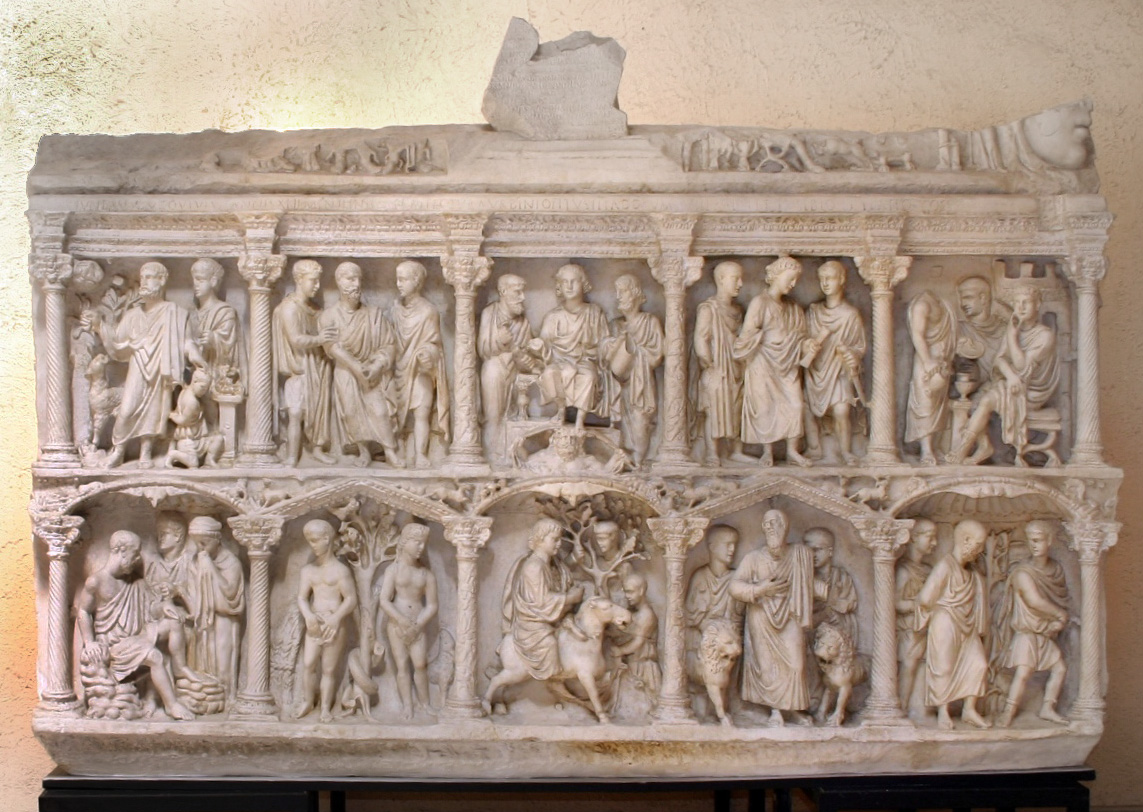
The Sarcophagus of Junius Bassus, dated by its inscription to 359 CE, depicts Peter under arrest and Paul being led to execution. It is direct evidence that these martyr narratives had become part of late-antique Christian visual culture. It is not a first-century record of their deaths, their motives, or a demand that they deny Jesus.
Belief, knowledge, and historicity are separate questions
Even a reliable report that someone died for a belief would establish a death and a commitment, not the truth of the belief. People can be sincere and mistaken. To show that a named person knowingly died rather than admit a story was fabricated, a source would have to establish that person’s identity, first-hand knowledge, the execution, and the refusal. These martyr texts do not do that.
The broader mythicist case does not depend on claiming that every Christian author knowingly lied. The texts can develop through literary creation, inherited belief, factional debate, and later legend. The martyr traditions document how later Christian writers constructed apostolic lives; they do not independently verify the Gospel biography.
Polycarp as a case study in martyrdom memory
Polycarp's letter and the Martyrdom of Polycarp present different claims and have different transmission histories. The following sections examine those texts separately from later apostolic Acts and arguments about whether a martyr could recant.
Three texts, three different claims
The Letter to the Philippians is a Christian instruction text attributed to Polycarp. The Martyrdom of Polycarp presents itself as a circular letter from the church at Smyrna about a persecution and Polycarp’s death. Irenaeus supplies a separate claim: he says he knew Polycarp and heard him speak about John and other people who had seen Jesus.
These documents do not form a single contemporary report. They have different narrators, purposes, transmission histories, and proposed dates. The historical claim about Jesus’ eyewitnesses depends on Irenaeus’ recollection, not on a surviving account by those witnesses.
The letter names Polycarp in its opening
The letter begins by naming ‘Polycarp and the presbyters with him’ as its senders. That is the text’s attribution; it is not an autograph or a separate signature that independently identifies the writer. Irenaeus, conventionally dated to the late second century, later says that a letter from Polycarp to the Philippians was extant. Eusebius repeats that attribution in the fourth century.
The evidence for authorship is therefore the letter’s own heading and later Christian testimony about it. Those are reasons scholars accept the attribution; they are not independent physical verification of who wrote the surviving text or when each part took shape.
The letter speaks through Christian scripture
The letter’s language closely reuses other Christian texts. Its opening echoes wording found in 1 Peter and Ephesians; chapters 2 and 7 draw on phrases also found in 1 Peter and 1 John. It assembles scriptural formulations rather than offering a narrated memory of Jesus’ actions or teachings.
Those overlaps matter to the source question. A text repeating Christian scripture shows a literary and theological network. It does not become an independent witness to the events narrated by the texts it uses.
The Ignatius link does not date the letter by itself
Chapters 13–14 refer to letters associated with Ignatius and describe sending material to Philippi. Chapter 9 already speaks of ‘the blessed Ignatius’ among exemplary sufferers. The difference between those passages has led scholars to propose that the surviving text combines more than one letter; other interpretations retain a single composition.
Either way, the proposed date depends on how the Ignatian letters are dated and how the Polycarp text is divided. The cross-reference is not a dated manuscript, and one text cannot independently prove the other’s early date. The [Ignatius article](/evidence/ignatius/) examines that corpus and its recensions.
The Smyrna letter claims eyewitness standing
The Martyrdom opens as a letter from the Smyrna church to the Christians at Philomelium. Its narrator uses ‘we’ and says some people present witnessed the miracles it describes. It names no eyewitness who can be checked against another record, and it supplies no Roman trial document or external account of the execution.
At the end, the text includes a copying story that traces a copy through Irenaeus, Caius, Socrates, and Pionius. That is a claim inside the transmitted text. The colophon does not provide an independently verifiable chain of custody for the text or its reported events.
The martyrdom is written as an imitation of Jesus
The narrator explicitly frames Polycarp’s death as a martyrdom ‘according to the Gospel’ and says he waited to be handed over as the Lord had done. The story uses scenes familiar from passion narratives: betrayal, an armed arrest, questioning before a Roman ruler, a predicted death, prayer, and execution.
These parallels show how the story makes Polycarp’s death meaningful to its Christian audience. They prevent the narrative from serving as independent corroboration of the Gospel passion: its author presents the martyr’s story through the same Christian literary tradition.
Miracle and memorial shape the account
The story says the flames formed an arch around Polycarp, his body looked like bread in an oven, a sweet smell rose from the fire, and a dove and a great quantity of blood came from his body. It then describes Christians gathering his bones and meeting annually at his tomb.
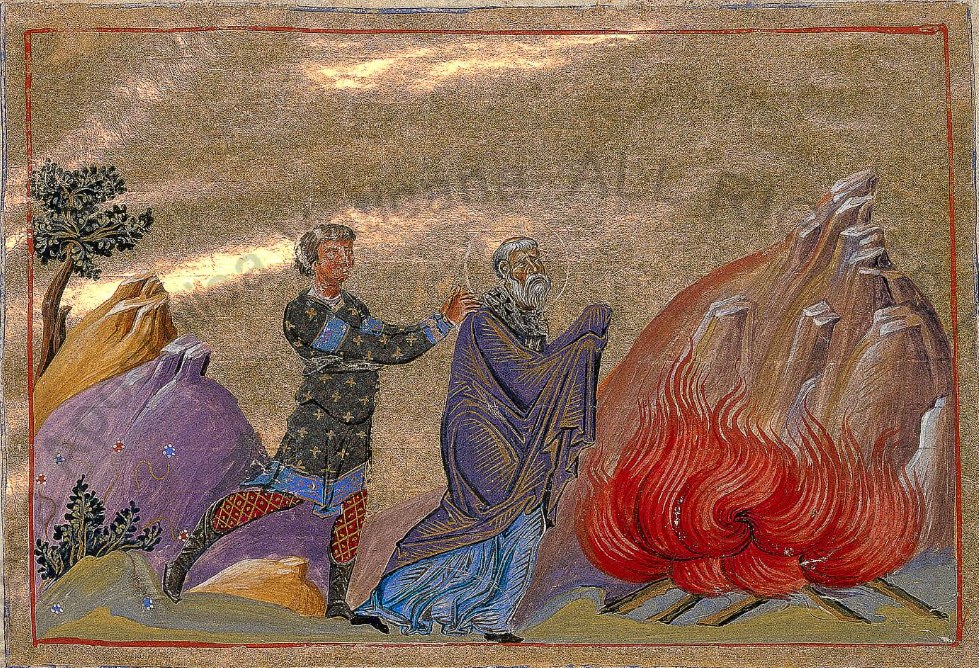
These details establish what the Smyrna narrator wanted its readers to believe and commemorate. They are features of a devotional martyr narrative, not independently documented observations about Jesus. The surviving illustrated image is a tenth-century Byzantine depiction, centuries after the death it represents.
Irenaeus makes the claimed link to John
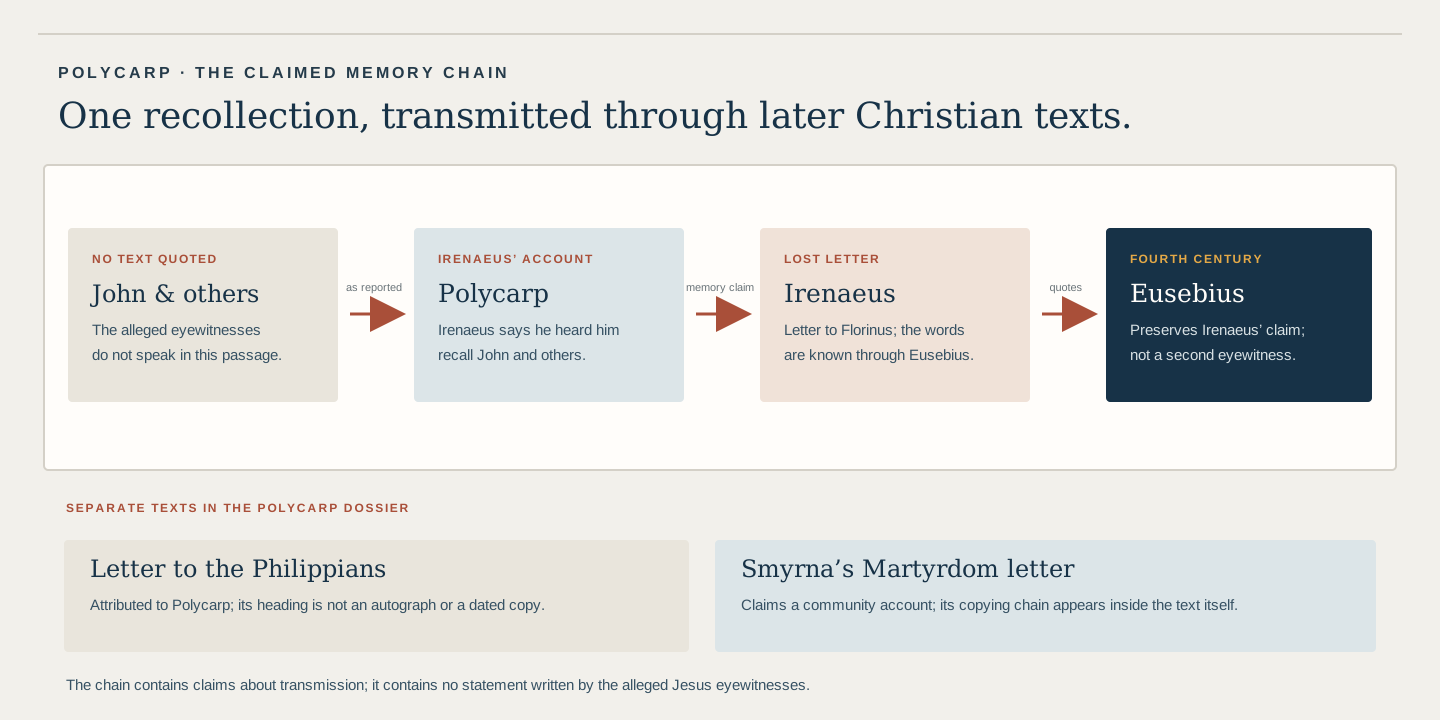
In a letter addressed to Florinus, Irenaeus says that as a boy he saw Florinus in Polycarp’s company in Asia. He then says Polycarp spoke about his association with John and others who had seen the Lord, and about what he had heard concerning Jesus’ teaching and miracles. Irenaeus does not quote John, name the other alleged witnesses, or give a recoverable account of what any of them said.
Irenaeus’ letter to Florinus is lost. Eusebius preserves this passage in Church History 5.20. Irenaeus’ separate discussion in Against Heresies 3.3.4 repeats the apostolic connection; it is another statement by the same writer, not an independent confirmation from John or an eyewitness. The chain therefore ends with Irenaeus’ claim about Polycarp’s memory.
The dates are reconstructions; the manuscripts are later
The Philippians letter is commonly assigned to the early or middle second century, but the text gives no composition date. Its proposed early date depends on the relationship to Ignatius, its literary sources, and the assumption that its present chapters belong together. Irenaeus’ late-second-century reference is the first explicit external claim that a letter by Polycarp to Philippi was extant.
The Martyrdom’s chapter 21 gives a date notice naming Statius Quadratus and Philip of Tralles, but its calendar readings and relationship to the rest of the work are disputed. A death around 155–156 is commonly proposed; Eusebius places the narrative under Marcus Aurelius, and his chronology associates it with about 166–167. Candida Moss argues that the extant Martyrdom is a later literary composition, possibly from the third century. These are competing reconstructions, not dates written on a contemporary copy.
All extant Greek manuscripts of the Philippians letter descend from a single source. The eleventh-century Vaticanus Graecus 859 preserves the Greek text only through 9.2; the remaining chapters depend on a Latin translation and Eusebius’ quotations. The Martyrdom’s separate Greek manuscript copies are medieval too; Eusebius preserves substantial excerpts in his fourth-century Church History. A 2024 textual study discusses the limits created by this multilingual transmission.
Source and transmission audit
Martyrdom claims and the texts that preserve them
| Date or period | Source | What it says or does | What it cannot establish |
|---|---|---|---|
| Early–middle second century by conventional reconstruction | Letter to the Philippians, heading and chapters 1–8 | The heading names Polycarp and the presbyters as senders; the letter uses language also found in Christian scriptural texts. | The heading is an attribution within the text. No evidence establishes a pre-Marcion date; no autograph or dated copy establishes its author or composition year. |
| Second-century Christian tradition | Letter to the Philippians 3.2; 9.2 | The text says Paul taught the Philippians, wrote to them, and serves as an example of patience. | This is the Polycarp text’s representation of Paul, not an independent witness to Paul or a first-century letter. |
| Date depends on the Ignatius reconstruction | Letter to the Philippians 9 and 13–14 | The text calls Ignatius blessed and refers to circulating letters associated with him. | The differing time cues have prompted a two-letter theory; either dating relies on the debated chronology and textual unity of both corpora. |
| Event conventionally placed c. 155–156 or 166–167 | Martyrdom of Polycarp 1–20 | A Smyrna church letter presents a first-person community narrative about Polycarp’s arrest, hearing, and death. | The narrator names no independently identifiable eyewitness and provides no external trial record. The event date is inferred from disputed chronological clues. |
| Text date disputed; second to third century proposals | Martyrdom of Polycarp 15–20 | The narrative reports miraculous events, recovery of bones, and annual commemoration. | These are the narrator’s religious claims and memorial program, not independent confirmation of Jesus or a verbatim transcript of the execution. |
| Late second century by conventional dating | Irenaeus, Against Heresies 3.3.4 | Irenaeus attributes a Philippians letter to Polycarp and says Polycarp had associated with apostles and people who saw the Lord. | It is Irenaeus’ later account; he does not provide a statement from John or a named Jesus eyewitness. |
| Irenaeus’ letter, preserved in the fourth century | Letter to Florinus, quoted in Eusebius, Church History 5.20 | Irenaeus claims personal childhood memories of Polycarp and says Polycarp recounted what he heard from John and others. | Irenaeus’ letter is lost. Eusebius’ quotation is the route by which this recollection is read; the other alleged witnesses speak nowhere in the passage. |
| Fourth century | Eusebius, Church History 3.36 and 4.15 | Eusebius repeats the attribution of the Philippians letter and preserves extended passages from the Smyrna martyrdom account. | Eusebius is a later Christian transmitter, not a contemporary witness to Polycarp’s reported meeting with John or to Jesus’ life. |
| Eleventh century and later manuscript witnesses | Vaticanus Graecus 859; Latin and Greek Polycarp witnesses | The medieval copies preserve the letter and martyrdom narrative through separate Greek and Latin branches. | A late manuscript can transmit an earlier work, but it cannot by itself establish the work’s proposed date, original author, or the events narrated. |
| Narrative set in the 40s CE; composition date reconstructed | Acts 12:1–2 | Acts says James son of Zebedee was killed by Herod with the sword. | The story is not an independent execution record and reports no recantation offer or eyewitness testimony about Jesus. |
| Later Christian narratives; composition dates disputed | Matthew 27:3–10 and Acts 1:18–19 | Two different scenes describe the death of Judas Iscariot. | Neither is a martyrdom account or evidence that Judas was killed for refusing to deny Jesus. |
| Late-second-century external reference; extant Greek copies from the 5th and 11th centuries | 1 Clement 5–6; Irenaeus, Against Heresies 3.3.3 | The letter reports Peter’s martyrdom and says the literary figure Paul was stoned and died under authorities. Irenaeus refers to a Roman church letter to Corinth in Clement’s period. | The letter itself gives no author or date. Its conventional first-century composition date is inferred; it gives no eyewitness source, execution record, or refusal-to-recant scene. |
| 150–200 CE · conventional composition estimate | Acts of Peter | A miracle narrative about Peter and Simon Magus ends with Peter’s inverted crucifixion. | The narrative is not an event-era record and does not establish Peter’s knowledge or a choice to recant. |
| 150–200 CE · conventional composition estimate | Acts of Paul | An anonymous narrative gives the literary figure Paul a career of miracles and a beheading in Rome. | A second-century narrative cannot be a contemporary report of a first-century execution or an independent witness to Jesus. |
| 150–200 CE · conventional composition estimate | Acts of Andrew | The apostle is given a mission and an elaborate crucifixion story; the text and its transmission are fragmentary. | The date and story belong to the literary work, not to an execution record from the first century. |
| Early third century · conventional composition estimate | Acts of Thomas | The narrative sends Thomas to India and ends with his execution by spears. | It is a later story about Thomas, not an eyewitness report or a documented recantation test. |
| Late antique and later apostle lists | Acts of Philip; Pseudo-Hippolytus, On the Apostles and Disciples; Matthew traditions | Later narratives and lists assign different fates to Philip, Bartholomew, Matthew, James son of Alphaeus, Simon, Jude, and Matthias. | The accounts are separate, sometimes incomplete or contradictory, and do not form a contemporary record of the Twelve. |
| c. 200 CE source quoted by a fourth-century historian | Gaius as quoted in Eusebius, Church History 2.25 | Caius points to Roman memorial sites associated with Peter and Paul; Eusebius separately reports their deaths under Nero. | The memorial references establish Roman commemoration by Caius’ time, not an execution file or the apostles’ motives. |
| 359 CE | Sarcophagus of Junius Bassus | The relief depicts Peter under arrest and Paul being led to execution. | The artwork establishes late-antique visual commemoration, not a first-century death or a refusal to deny Jesus. |
The case
The phrase ‘die for a lie’ assumes both that the martyrdom accounts are historically secure and that the people described had direct knowledge of the Gospel events. The texts do not establish those premises as a group. Polycarp's martyrdom narrative and the later apostolic Acts each document Christian memory and literary shaping that must be assessed separately.
Conclusion
Martyrdom stories document what later Christian texts claimed about apostles and Polycarp. They do not independently verify Jesus' life, establish eyewitness access, or prove that the figures described knew a story was true or false.