Second-century Christian texts present competing Gospel stories and claims about authority. Eusebius' fourth-century history preserves some of those earlier disputes through quotations, summaries, and succession accounts.
Different texts, different portraits
The Gospel of Thomas is a collection of 114 sayings attributed to Jesus; the Gospel of Judas is a revelatory dialogue that gives Judas a distinctive role; and the Gospel of Peter retells the passion and resurrection. The Protevangelium of James tells a story of Mary's parents and childhood, while the Infancy Gospel of Thomas gives Jesus a childhood marked by curses and miracles.
The texts have different literary forms and documentary histories. Standard composition estimates place the Gospel of Judas in the middle decades of the second century, the Protevangelium of James in the latter half of that century, and the Gospel of Peter somewhere in the second century; the date of Thomas remains disputed. These are reconstructions from literary and transmission evidence. No manuscript supplies a composition year, and a proposed composition date is not the same thing as a dated copy.
The Infancy Gospel's Jesus
The Infancy Gospel of Thomas depicts a child Jesus animating clay birds, cursing children who anger him, and healing Joseph's son James after a snakebite. The story names James as Joseph's son; it does not identify him in that scene as one of the brothers in John 7:5, where Jesus' brothers are said not to believe in him during his ministry.
The comparison shows that Christian writers developed competing childhood narratives and family portraits. The later story is evidence for the imaginative range of Christian literature, not an independent childhood record.
The canon was argued over
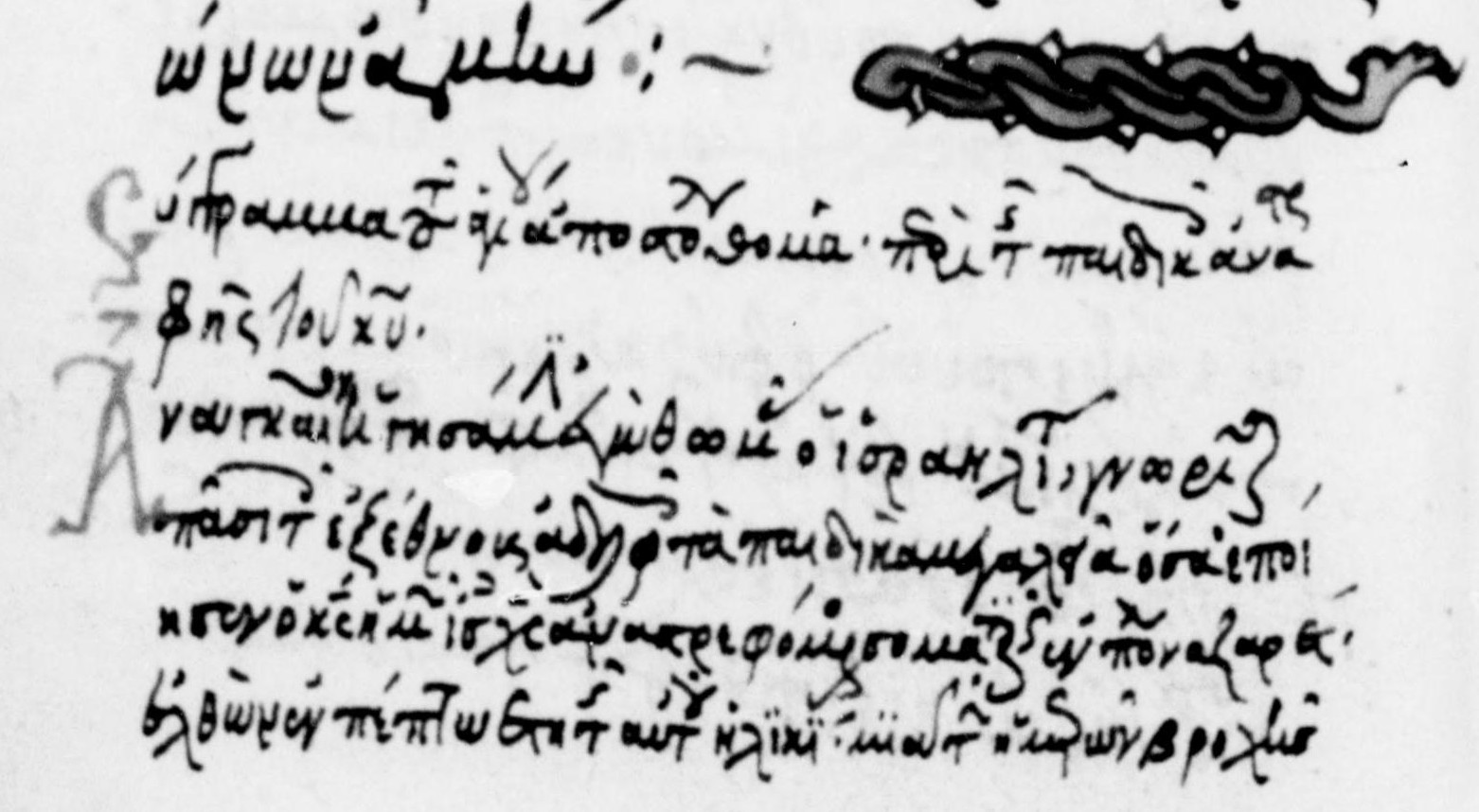
In Church History 3.25, Eusebius sorts writings into categories. He lists the four Gospels, Acts, fourteen letters attributed to Paul, 1 John, and 1 Peter among accepted books; James, Jude, 2 Peter, and 2–3 John among writings recognized by many but disputed; and the Acts of Paul, Shepherd of Hermas, Apocalypse of Peter, Epistle of Barnabas, and Teachings of the Apostles among rejected works. He records that some readers placed Revelation in either accepted or rejected lists, and that some especially valued the Gospel according to the Hebrews.
Eusebius separately describes Gospels of Peter, Thomas, and Matthias and other apostolic Acts as books used by groups he labels heretical. He says their style and theology make them fictions and calls them absurd and impious. That language records Eusebius' own boundary-making; it does not establish who wrote those texts, when they were composed, or that all Christian communities shared his judgement. His catalogue is evidence that competing books and classifications existed by his time, not proof that the books he accepted preserve first-century reports.
What Gospel diversity shows
The competing texts make later orthodoxy a historical outcome, not proof that the first Christians shared one uncontested account or one agreed apostolic library. Canonical status records where later authorities drew boundaries; it does not establish the chosen texts' authorship or first-century composition.
The different genres, portraits, and reception histories show a developing literature in which communities constructed, circulated, and authorized competing accounts of Jesus.
Eusebius and the documentary record
Writing in the fourth century, Eusebius quotes texts he attributes to earlier authors, reports stories he assigns to records or tradition, and calculates dates for church successions. These are different kinds of evidence and require separate source checks.
What Eusebius says he is doing
In the opening of Church History, Eusebius says he will record apostolic successions, events, prominent leaders, and doctrinal disputes. He acknowledges that earlier Christian writers reach him in brief fragments, then describes selecting passages and weaving them into a continuous history. He also says his work will show Christianity's antiquity and divinity. This is direct evidence of his historical program and editorial role.
His own description defines Church History as a curated fourth-century account written to establish Christian antiquity. Each quotation, tradition, and succession date must be traced to the particular witness Eusebius names and to the record that actually preserves it.
The ‘useful falsehood’ passage quotes Plato
In Preparation for the Gospel 12.31, Eusebius quotes Plato's argument that a lawgiver may use a falsehood as a remedy for people who need that kind of instruction. Eusebius then applies Plato's point to scriptural descriptions of God as jealous, asleep, or angry, calling them forms of instruction suited to their audience.
The passage discusses Plato's political teaching and figurative language in scripture. It does not say Eusebius fabricated the Testimonium, the Abgar correspondence, or church chronologies. Treating it as a confession of historical fraud mistakes a discussion of scriptural instruction for an admission about a named historical source.
Mark and Alexandria
Church History 2.16 says, ‘they say’ Mark was sent to Egypt and first established churches in Alexandria. Eusebius names no source for that claim in the passage. This is the first clear documentary statement connecting Mark with the Alexandrian church; it records a tradition reported by Eusebius, not an account from Mark's lifetime.
In the following chapter Eusebius identifies the ascetic community described by Philo in On the Contemplative Life as early Christians. Philo describes the Therapeutae in Jewish scriptural and communal terms and does not call them Christians. Eusebius' identification shows him reading an earlier Jewish text into a Christian origin story; it does not make Philo an independent witness to Mark in Alexandria.
Clement's letter and Eusebius' chronology
Church History 3.15 places Clement's succession after Anencletus in Domitian's twelfth regnal year. In 3.16 Eusebius identifies the Roman church's letter to Corinth as Clement's and associates it with a Corinthian dispute. The letter itself speaks as the Roman congregation and gives no year or personal signature. Eusebius does not write ‘96 CE’: the familiar c.96 date is a modern chronological reconstruction, not a date stated inside the letter.
In 3.34 Eusebius places Clement's transfer of office and death in Trajan's third year, after nine years in office. These are Eusebius' later succession calculations. They do not make the letter a contemporary record, and they do not supply independent confirmation of its named author. The separate Clement article examines the letter's wording and external attestations.
Ignatius in the Trajan narrative
Church History 3.36.3 says, ‘Report says’ Ignatius was sent from Syria to Rome and became food for wild beasts. Eusebius places the notice in his Trajan-era sequence, after his account of Trajan's response to Pliny. He does not identify the source of this report or cite a contemporary record of the execution.
Eusebius is the first writer who places this martyrdom tradition in Trajan's period. That dates the report to Eusebius' fourth-century history. The dating and textual forms of the Ignatian letters require their own evidence and are examined in the Ignatius article.
The Abgar letters and the archive claim
In Church History 1.13 Eusebius says he took correspondence between Jesus and King Abgar from Edessa's public records and translated it from Syriac. His own statement is the documentary basis for the archive claim: he cites no separate archival copy, catalogue entry, or chain of custody for the purported first-century letters.
The later Syriac Doctrine of Addai preserves a related, expanded form of the story. It belongs to the same literary tradition and does not independently verify a first-century exchange. Eusebius' report establishes that the correspondence was presented as archival history in the fourth century; it does not authenticate the letters as documents from Jesus' lifetime.
Dionysius of Corinth reaches us through Eusebius
In Church History 4.23 Eusebius quotes and summarizes letters attributed to Dionysius, bishop of Corinth, including his response to the Corinthian church. Eusebius is the sole source through which these fragments are known. The attribution and the quoted wording both reach the reader through this fourth-century chapter.
Later references that depend on Eusebius do not create an independent witness. His quotation gives no date for the letters and supplies no separate copy against which its wording or attribution can be checked.
The Testimonium's first clear quotation
The first clear quotation of the familiar Testimonium Flavianum in the documentary record appears in Eusebius' Church History 1.11 and Demonstration of the Gospel 3.5. The quoted wording includes the confession ‘He was the Christ’ and a resurrection claim. Origen refers to Josephus elsewhere, including the James passage, and says Josephus did not accept Jesus as Christ; he does not quote the Testimonium.
That sequence supports Christian interpolation in the Josephus transmission: Eusebius' fourth-century quotations contain an explicit Christian confession, while Origen's earlier account of Josephus conflicts with it. The evidence points to insertion in the transmission before the medieval copies, but it does not identify a specific hand or establish that Eusebius personally inserted it. The Josephus article examines the wording and context of both Antiquities passages in detail.
In the older English translation of Demonstration 3.5, Eusebius calls Josephus ‘Hebrew.’ That is the translator's rendering; the passage identifies the work as Josephus' Antiquities, Book 18, and does not say Eusebius consulted a Hebrew-language manuscript.
What Eusebius' record establishes
Eusebius directly establishes what a fourth-century Christian historian quoted, attributed, classified, and dated. A citation may preserve an earlier text, but an attribution alone does not date it; an archive claim is not the archive itself; and a succession table is not a date written in a contemporary letter.
The Testimonium's quotation history, the unverified Abgar archive claim, and Eusebius' retrospective regnal calculations are distinct issues. Together they show how a later Christian writer transmitted and organized claims about origins. None is a first-century documentary witness to Jesus.
Text and transmission audit
Competing texts and Eusebius' later selections
| Passage or claim | Source | What it says or does | What it cannot establish |
|---|---|---|---|
| Fourth-century work | Eusebius, Church History 1.1–2 | States a project of apostolic succession, prominent leaders, disputes, selected extracts, and Christian antiquity. | Describes Eusebius' purpose and method; it does not independently date or verify the earlier claims he reports. |
| Fourth-century work | Praeparatio Evangelica 12.31 | Quotes Plato on a beneficial falsehood and applies the idea to figurative descriptions of God in scripture. | A discussion of political pedagogy and scriptural figures is not an admission of historical fabrication. |
| Fourth-century report | Church History 2.16–17 | Reports an unnamed tradition about Mark in Alexandria and identifies Philo's Therapeutae as Christians. | Eusebius names no source for Mark's Alexandrian mission; Philo does not identify the Therapeutae as Christians. |
| Fourth-century chronology | Church History 3.15–16; 3.34 | Places Clement's succession under Domitian and his death under Trajan; attributes the Corinthian letter to him. | These regnal calculations are Eusebius' retrospective chronology; the letter itself has no date or personal signature. |
| Fourth-century report | Church History 3.36.3 | Reports that Ignatius was sent from Syria to Rome and killed by beasts; the narrative places him in the Trajan period. | The passage names no source for the report and is not a contemporary record of the execution. |
| Fourth-century report | Church History 1.13 | Claims that the Jesus–Abgar letters came from Edessa's public records and were translated from Syriac. | Eusebius cites no separate archive record to verify the claim. |
| Fourth-century quotation | Church History 4.23 | Quotes letters attributed to Dionysius of Corinth. | The fragments are known through Eusebius; later writers who depend on his account are not independent witnesses. |
| Early-fourth-century quotation | Church History 1.11; Demonstration of the Gospel 3.5 | Provides the first clear quotations of the received Testimonium Flavianum in the documentary record. | The quotation history and Christian wording support interpolation but do not identify the interpolator. |
| Fourth-century classification | Church History 3.25 | Separates accepted, disputed, and rejected Christian writings and names texts used by groups he condemns. | This is evidence for fourth-century classification and dispute, not a first-generation canon list. |
The case
The varied texts document communities arguing over Jesus, scripture, and which writings should carry authority. Eusebius is a later transmitter who selects and frames material; his quotations attest the wording he reports by his own time, not the date or authorship of a lost source by themselves.
Conclusion
Early Christian texts preserve competing portraits and claims. Eusebius is an important but selective fourth-century transmitter; neither the diversity nor his later quotations independently establishes a first-century Jesus.