Claudius 25.4 reports expelling Jews from Rome amid disturbances associated with ‘Chrestus.’ Nero 16.2 reports punishment of Christians. Neither passage names Jesus, identifies a founder, or links the group under Claudius to the group under Nero.
Two references, two different claims
Suetonius contains two passages commonly used in arguments about Jesus. In Claudius 25.4, Claudius expels Jews from Rome after disturbances associated with Chrestus. In Nero 16.2, Suetonius says Christians were punished under Nero and labels their religion new and harmful.
The passages are in separate imperial biographies and report different actions under emperors whose reigns did not overlap. Suetonius never says Nero’s Christians followed the Chrestus named in the Claudius passage. Reading the two as one continuous story supplies a link the text does not make.
Claudius 25.4: the sentence and its setting
The Latin reads: Iudaeos impulsore Chresto assidue tumultuantis Roma expulit. A standard translation is: ‘Since the Jews constantly made disturbances at the instigation of Chrestus, he expelled them from Rome.’ It is a brief clause in Suetonius’ list of Claudius’ measures and reported acts.
Suetonius names the people expelled and the person he calls Chrestus. He gives no personal history, source, calendar year, or explanation of the disturbance. He does not call the people Christians, name Jesus, or say that the instigator was the founder of a later Christian movement.
The wording of Claudius 25.4
Claudius 25.4 names Chrestus and says Claudius expelled Jews amid disturbances associated with that name. Suetonius does not identify Chrestus as Jesus or identify the people involved as Christians.
The expulsion has no year in Suetonius
Claudius ruled from 41 to 54 CE, but Suetonius assigns no year to the expulsion. The passage supplies no date more precise than the emperor’s reign.
Nero 16.2 names Christians, not their founder
Suetonius writes that punishment was inflicted on the Christiani, ‘a class of people devoted to a new and harmful superstition.’ Unlike Claudius 25.4, the word Christiani does appear here. The sentence records a group label and punishment; it gives no account of Jesus, the group’s founder, or the source of Suetonius’ information.
Nero 16 is a catalogue of policies and regulations: it lists rules on spending, public meals, and tavern food before mentioning Christians, then returns to chariot drivers and performers. Suetonius discusses the great fire elsewhere, at Nero 38. Section 16.2 does not say the punishment was caused by the fire or connect it to the Claudius-era expulsion.
Composition date and manuscript chain
The conventional date for Suetonius’ Lives is early in Hadrian’s reign, often placed around 119–122 CE. That estimate depends on a dedication to Septicius Clarus reported by the sixth-century writer John the Lydian. Gavin Townend notes that it is uncertain whether the dedication originally accompanied the complete series or whether every Life was finished and published while Suetonius held office. The Claudius and Nero passages themselves carry no composition date.
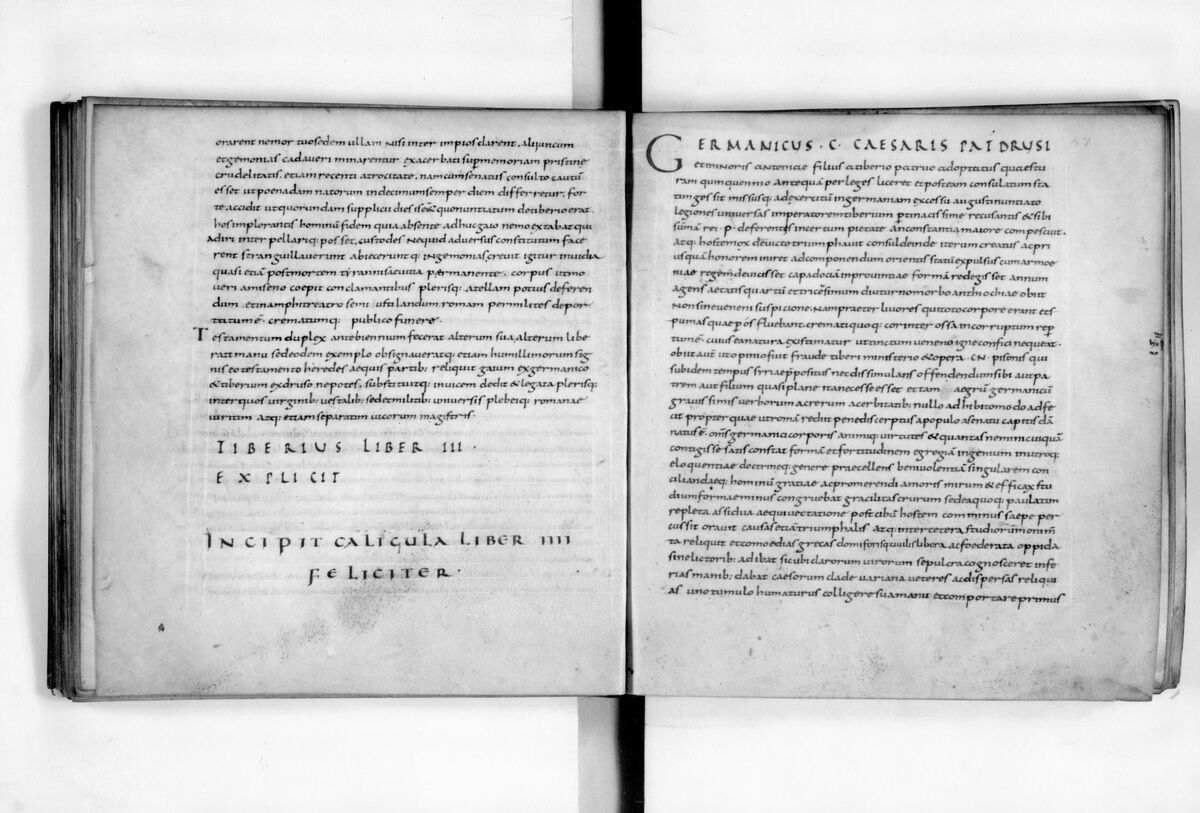
The manuscript record is later still. Robert Kaster traces the extant copies to an archetype produced in north-central France in the late eighth or very early ninth century. The ninth-century BnF manuscript pictured here is a copy of Suetonius’ Caesars, not an autograph or a first-century witness. On this site’s chronology, the conventional early-second-century composition date is a reconstruction; accepting it would still leave both notices late, indirect reports that say nothing biographical about Jesus.
Source audit: wording, interpretation, and transmission
The records below separate what each text says from the date and identification later readers assign to it. A conventional date for an event or a work is not the same as a date stated in the passage or a surviving contemporary manuscript.
Chronology check
Evidence by date
| Date or period | Source | What it says or does | What it cannot establish |
|---|---|---|---|
| Claudius’ reign · 41–54 CE; no year stated | Suetonius, Claudius 25.4 | Reports that Claudius expelled Jews from Rome amid disturbances associated with Chrestus. | Does not call the people Christians, name Jesus, explain the dispute, or supply a year or source for the report. |
| Nero’s reign · 54–68 CE; no year stated | Suetonius, Nero 16.2 | Says Christians were punished and describes their group as devoted to a new and harmful superstition. | Does not name Jesus, describe his life, identify the group’s founder, mention the fire, or connect the passage to Claudius 25.4. |
| Early Hadrianic period · c. 119–122 CE by conventional reconstruction | Suetonius, Lives of the Caesars | The proposed date is based on a dedication to Septicius Clarus reported by John the Lydian. | The dedication is not extant in the work, its attachment to all twelve Lives is uncertain, and neither notice supplies its own date. |
| Late eighth or early ninth century · manuscript archetype | BnF Latin 6115 and the Suetonian manuscript tradition | The extant copies of the Caesars descend from a medieval archetype; BnF Latin 6115 is an early surviving copy. | A medieval copy preserves Suetonius’ text but is not a contemporary document from the reigns of Claudius or Nero. |
The case
Claudius 25.4 names Chrestus. It does not name Jesus or identify the people involved as Christians. The separate Nero notice supplies neither identification nor a link to the Claudius episode.
Conclusion
Read on the conventional dates, the passages report disturbances under Claudius and punishment of Christians under Nero. They do not identify the instigator as Jesus, describe his life, or establish the proposed link between the two groups.