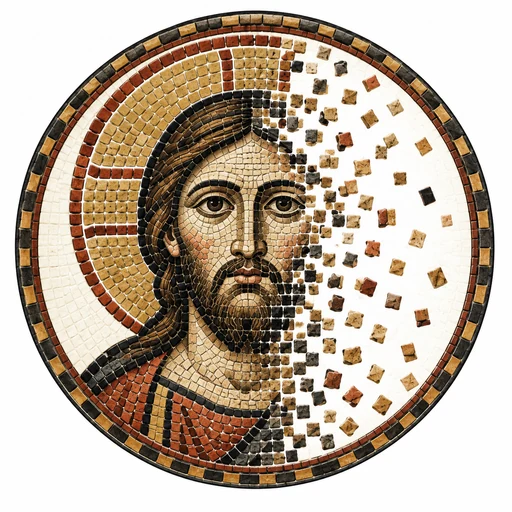
Galatians 1:18–19 presents a speaker who says he met Cephas and James, called “the Lord’s brother.” First Corinthians 15:3–8 gives an appearance list. Both are claims within letters attributed to Paul. There is no evidence that the Pauline collection predates Marcion; its first documentary references are later accounts about Marcion’s circle. The c. 144 CE horizon is reconstructed, not the date of an extant report or Pauline manuscript.
A first-person voice inside the letters
The letters are first-person compositions that identify their speaker as Paul and portray him as an apostle. That establishes what the texts claim about their narrator. No first-century inscription, administrative record, or independent contemporary letter identifies that narrator or confirms the travels described in the collection.
On this site's reading, the Pauline voice is a second-century literary construction associated with Marcion-era Christianity. A first-person narrative can make claims about its speaker; it does not independently authenticate them.
The Marcion-era documentary trail
Justin's First Apology names Marcion as a living teacher but does not identify a Gospel or list a collection of Paul's letters. Irenaeus and Tertullian later describe a Gospel and letters attributed to Paul as texts used by Marcion. These are later Christian accounts, not reports written in 144 CE. There is no evidence that the Pauline collection predates Marcion.
The c. 144 date used in this site's chronology is a reconstruction of the Marcion-era horizon, not the date of an extant document or manuscript. Dates earlier than Marcion assigned to the letters are likewise reconstructions; no contemporary document or dated manuscript establishes them.
James, ‘the Lord’s brother’
Galatians 1:18–19, in a letter attributed to Paul, says that its speaker met James and calls him ‘the Lord’s brother.’ The letter gives no parentage, genealogy, or independent record identifying James. Its wording is a claim inside a later-transmitted Christian text, not an external witness to a biological relationship or to Jesus’ existence.
There is no evidence that the letter collection predates Marcion. The meeting and the title therefore cannot be used as independently documented first-century testimony.
The appearance list in First Corinthians 15
First Corinthians 15:3–8 introduces a tradition as ‘received’ and ‘delivered’ and names Cephas, the Twelve, five hundred people, James, all the apostles, and finally the speaker. It says most of the five hundred were still alive, but names none of them. It gives no date or location for the appearances and no independent account from anyone on the list. The passage records the letter's claims; it does not provide separate witness statements.
The words ‘received’ and ‘delivered’ do not identify who passed on the tradition or when it formed. No complete Marcionite manuscript of the letters exists, so Marcion's version of this chapter is reconstructed from later opponents' descriptions and quotations. That evidence cannot establish that the appearance list was inserted after Marcion. Its presence in the received text remains a claim within that text, not independent corroboration.
What the letters say about Jesus
The letters make brief claims about Jesus: Galatians 4:4 says he was ‘born of a woman’; Romans 1:3 describes him as descended from David ‘according to the flesh’; and First Corinthians 11:23–26 recounts a meal tradition. These lines do not give a birth narrative, genealogy, public-ministry account, or source that can be checked independently of the letters.
Galatians 1:11–12 presents Paul's message as coming through revelation. First Corinthians 9:1 and 15:8 describe seeing Jesus and an appearance to Paul. The letters portray an apostolic revelation experience; they do not narrate Paul accompanying Jesus during a public ministry.
Acts and the named historical settings
Acts is a separate narrative, not a contemporary external record of Paul. Galatians 1–2 gives the letter's sequence of visits to Jerusalem, including a stay in Arabia; Acts 9 and 15 tell related episodes with different details and narrative aims. Agreement on names or locations does not make the texts independent records of the same events.
The Delphi inscription confirms Gallio's office as proconsul of Achaia; it does not name Paul. Acts 18 places Paul before Gallio, but connecting that episode to the inscription still depends on Acts' narrative. The Corinthian Erastus inscription is not securely identified with the person named in Romans 16:23; scholarship disputes that identification. Neither inscription independently documents Paul.
P46 is a manuscript copy
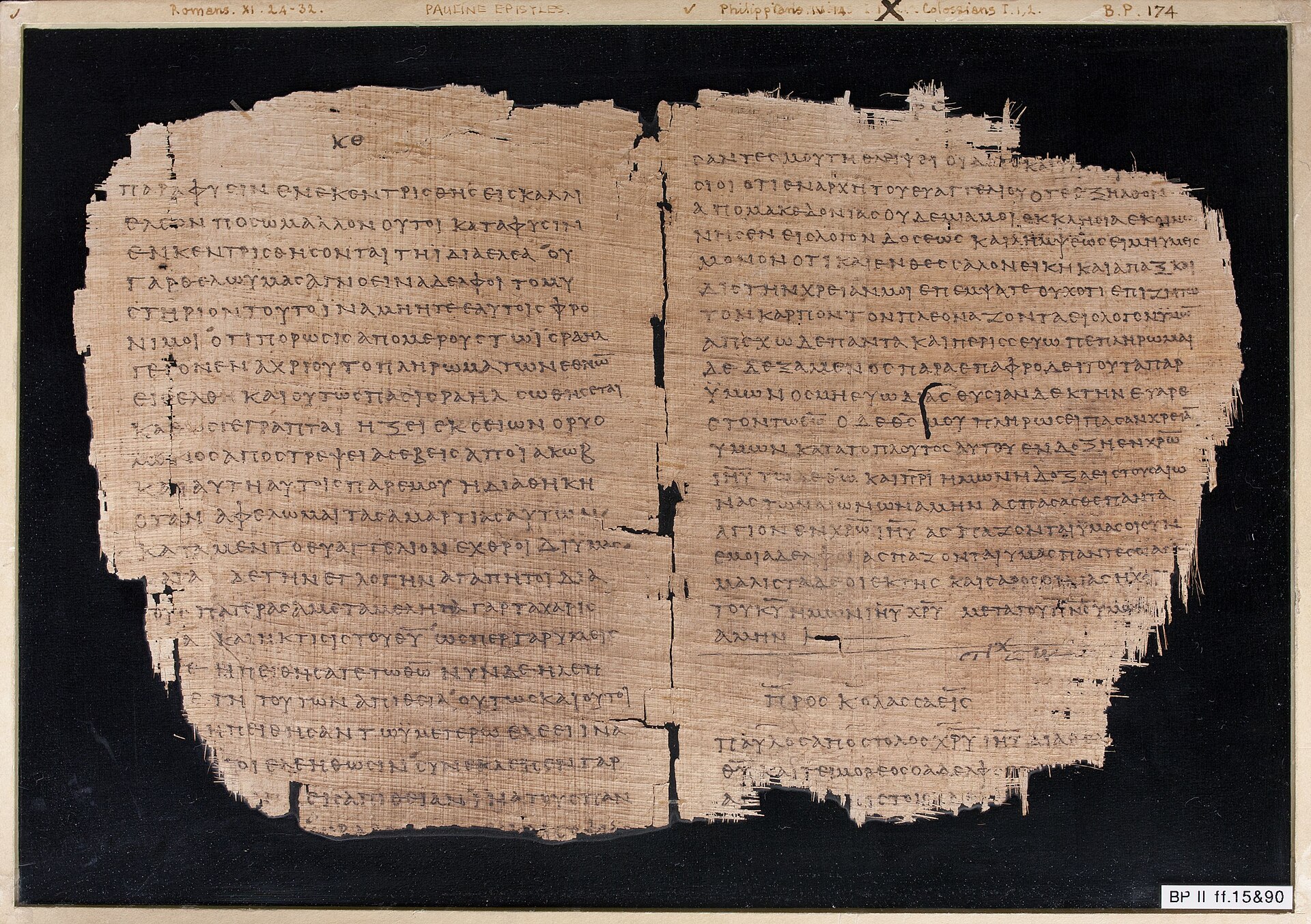
Papyrus 46 (P46) is a physical codex copy of a collection of Pauline letters, palaeographically dated around the late second or early third century. It is not an autograph, and its date cannot by itself determine when the letters were composed or who wrote them.
A manuscript copy demonstrates that the text it contains existed by the time the copy was made. It does not verify the first-person biography or first-century dating assigned to the letters.
The case
On this site's reading, Paul is a second-century literary figure. The letters’ first-person voice and named figures occur within the same literary corpus; they do not independently verify its narrator, its chronology, or Jesus’ biography.
Conclusion
The letters record claims made by the Pauline texts. Galatians gives no genealogy for James, and First Corinthians 15 provides no independent witness accounts. No contemporary external record identifies the author as a first-century Paul.